---
title: What 50 Years of Pop Radio Already Knew About the Restaurant Industry
description: This is how pop music reflects the restaurant industry's evolution, revealing timeless themes of brand loyalty, nostalgia, and connection in dining culture.
image: https://popcorngtm.com/hubfs/50%20years%20of%20pop%20radio%20and%20restaurants-1.png
---
[Skip to content](https://popcorngtm.com/blog/what-50-years-of-pop-radio-already-knew-about-the-restaurant-industry#main-content)


[](https://popcorngtm.com)


- [About Us](https://popcorngtm.com/about-us)
- [Marketing & GTM](https://popcorngtm.com/restaurant-technology-marketing)
Show submenu for Marketing & GTM
- [Fractional CMO](https://popcorngtm.com/fractional-cmo)
- [Marketing Playbooks](https://popcorngtm.com/restaurant-technology-marketing)
- [HubSpot CRM & Websites](https://popcorngtm.com/websites)
- [Franchise Intelligence](https://popcorngtm.com/frandata)
- Media Resources
Show submenu for Media Resources
- [Modern Solutions for Modern Restaurants™ Podcast](https://popcorngtm.com/podcasts)
- [Hot Takes on a Fresh Blog](https://popcorngtm.com/blog)
- [Restauromics Financial News](https://popcorngtm.com/restauromics)
- [Brand Archetype Primer](https://popcorngtm.com/brand-archetype-primer)
- [Air Cover](https://popcorngtm.com/aircover)
- [About Us](https://popcorngtm.com/about-us)
- [Marketing & GTM](https://popcorngtm.com/restaurant-technology-marketing)
Show submenu for Marketing & GTM
- [Fractional CMO](https://popcorngtm.com/fractional-cmo)
- [Marketing Playbooks](https://popcorngtm.com/restaurant-technology-marketing)
- [HubSpot CRM & Websites](https://popcorngtm.com/websites)
- [Franchise Intelligence](https://popcorngtm.com/frandata)
- Media Resources
Show submenu for Media Resources
- [Modern Solutions for Modern Restaurants™ Podcast](https://popcorngtm.com/podcasts)
- [Hot Takes on a Fresh Blog](https://popcorngtm.com/blog)
- [Restauromics Financial News](https://popcorngtm.com/restauromics)
- [Brand Archetype Primer](https://popcorngtm.com/brand-archetype-primer)
- [Air Cover](https://popcorngtm.com/aircover)
[BOOK TIME](https://popcorngtm.com/contact)
[Hot Takes](https://popcorngtm.com/blog/tag/hot-takes), [Industry](https://popcorngtm.com/blog/tag/industry)
# What 50 Years of Pop Radio Already Knew About the Restaurant Industry
[By \- Paul Molinari,](https://popcorngtm.com/blog/author/paul-molinari) Jul 24, 2026
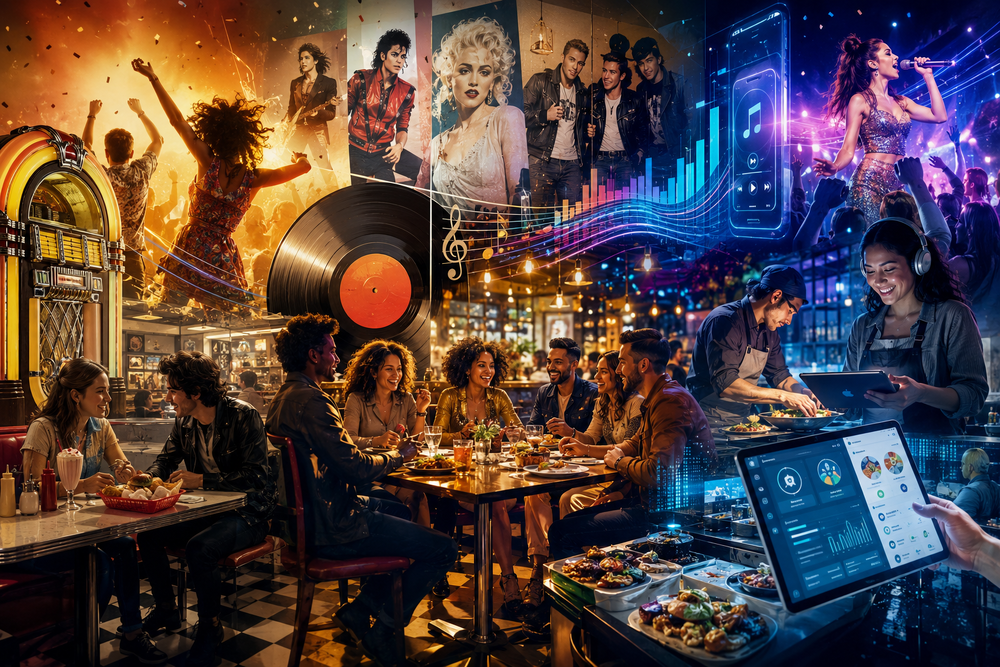
It starts, as these things often do, with a man in a construction helmet insisting that nothing is better than a Big Mac, and then insisting it again just to be sure. The Village People meant it as a joke (or a metaphor, or both), but strip away the wink and you've got the oldest trick in restaurant marketing: total, uncomplicated brand loyalty. Fifty years later, chains still spend nine figures a year chasing exactly that feeling, and they still can't buy a jingle as sticky as ["nothing's better, nothing's better, nothing's better than a Big Mac."](https://www.youtube.com/watch?v=wH3sQL3n44Q)
That's sort of the thesis here. Pop music has been quietly filing field reports on the restaurant industry for half a century, and nobody was listening because we were all too busy singing along. Pull the lyrics together and you get something closer to an oral history than a playlist.
Take the drive-thru. In [*Parents Just Don't Understand*](https://www.youtube.com/watch?v=jW3PFC86UNI&list=RDjW3PFC86UNI&start_radio=1), the Fresh Prince steals his mom's Porsche, picks up a girl, and "hits McDonald's" for two Big Macs and two large fries, turning the drive-thru into a stage for showing off and a rite of passage with its own choreography. That ritual hasn't gone anywhere; it's just been re-platformed. The same behavior now happens through a mobile app with a geofenced "start my order" button and an AI voice named something like Ava taking your combo meal order in Ohio. The teenagers changed. The need to be seen pulling up somewhere didn't.
Then there's the nostalgia machine, which country radio figured out before anyone had a word for "brand storytelling." [Dairy Queen shows up in what feels like every third country song](https://www.youtube.com/watch?v=cteh3eKl0oo&list=RDcteh3eKl0oo&start_radio=1) of the last thirty years: Alan Jackson, Trace Adkins, Brad Paisley, Randy Travis, all circling the same soft-serve cone like it's a national monument. It functions as Americana shorthand more than an ice cream endorsement, the same reason menu boards today lean so hard on words like "scratch-made," "grandma's recipe," and "since 1962." Jimmy Buffett ran the same play from the other coast: [*Cheeseburger in Paradise*](https://www.youtube.com/watch?v=jBsPZV14I-k&list=RDjBsPZV14I-k&start_radio=1) reads less like a song about a burger than a song about the memory of one, lettuce and tomato and a cold draft beer standing in for an entire vacation. John Mellencamp did it too, parking [two teenagers outside a Tastee Freez](https://www.youtube.com/watch?v=h04CH9YZcpI&list=RDh04CH9YZcpI&start_radio=1) in *Jack and Diane* and turning a regional soft-serve chain into the sound of being young in a small town. Nostalgia sells because it always has. The industry just calls it "heritage branding" now instead of admitting it learned the move from a jukebox.
Not every lyric is a compliment, though, and the industry's trust problem has its own soundtrack. [Digital Underground got busy in a Burger King bathroom](https://www.youtube.com/watch?v=PBsjggc5jHM&list=RDPBsjggc5jHM&start_radio=1) in *The Humpty Dance*, which (depending on how you squint) is either an indictment or a testimonial to how clean the place was. Eminem went considerably darker in [*The Real Slim Shady*](https://www.youtube.com/watch?v=eJO5HU_7_1w&list=RDeJO5HU_7_1w&start_radio=1), imagining the guy at Burger King "spitting on your onion rings," a lyric that lands very differently in an era of viral employee TikToks and franchise brands fighting to control a narrative they didn't write. The paranoia in that verse (is anyone watching what happens behind the counter) is the same anxiety driving today's obsession with open kitchens, kitchen-cam livestreams, and "meet your cook" content. Turns out transparency is less a 2020s invention than damage control for a fear that's been around since at least 2000.
The labor story is in there too, if you listen for it. [B.o.B, in *Airplanes*, name-checks "tryin' to get a tip at Subway"](https://www.youtube.com/watch?v=6RGGi3JiglY&list=RD6RGGi3JiglY&start_radio=1) as shorthand for rock bottom, a small and accurate detail since most Subway counters never had a tip jar to try. It's a throwaway line, but it's also the whole current conversation about service-industry wages, tipping culture, and why the [labor market for quick-service work is so brutally tight](https://popcorngtm.com/restauromics), compressed into one bar of a rap song fifteen years before anyone was calling it a "labor crisis" in a trade publication.
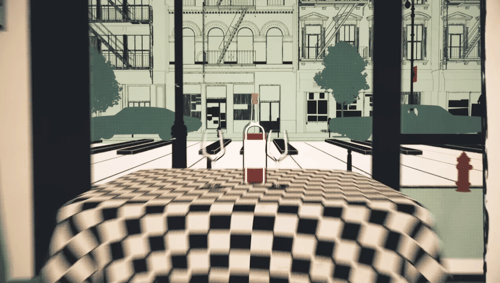And then there's the stuff that's disappearing. Suzanne Vega sat alone at the counter of NYC's [Tom's Restaurant in *Tom's Diner*](https://www.youtube.com/watch?v=DCCWVk1fgpY&list=RDDCCWVk1fgpY&start_radio=1), watching a stranger read the paper, capturing the quiet loneliness of a neighborhood diner as a daily fixture in someone's life. [Billy Joel went the opposite direction in *Scenes from an Italian Restaurant*](https://www.youtube.com/watch?v=izzM9LXqP-U&list=RDizzM9LXqP-U&start_radio=1), setting an entire breakup inside a linen-tablecloth ritual with a bottle of white and a bottle of red. There's a similar mourning in the [Eagles' *Sad Café*](https://www.youtube.com/watch?v=qQFFt3GpvmM&list=RDqQFFt3GpvmM&start_radio=1), written the moment a Sunset Strip hangout (I think it's about the old Troubadour) started to change, and a much bigger one in Arlo Guthrie's eighteen minutes of counterculture built around a [restaurant that would feed and shelter anyone who walked in.](https://www.youtube.com/watch?v=m57gzA2JCcM&list=RDm57gzA2JCcM&start_radio=1) All four are eulogies, in their own way, for the "third place": the diner, the trattoria, the roadside stop, and the joint that knows your order, at exactly the moment the industry is worried it's losing that same thing to ghost kitchens, [lame-ass QR-code menus](https://www.youtube.com/watch?v=lMMNOvQG4Gg&t=764s), and a dining room nobody sits in anymore.
Put it all together and the "state of the restaurant industry" isn't about food. It's about the same four things it's always been about, whether [Warren Zevon is name-dropping Trader Vic's](https://www.youtube.com/watch?v=qae25976UgA&list=RDqae25976UgA&start_radio=1) for atmosphere or [Bob Seger is pulling into a truck-stop diner at 2 a.m. on tour](https://www.youtube.com/watch?v=GONmFCkCGCc&list=RDGONmFCkCGCc&start_radio=1): convenience, identity, trust, and connection. The tech changes (drive-thru AI instead of a teenager at a speaker box, a loyalty app instead of a punch card), but the reason someone pulls into a parking lot at all hasn't moved an inch since the Village People declared their love for a Big Mac. Any restaurant brand trying to figure out what matters to guests in 2026 could do worse than cross-referencing its [positioning](https://popcorngtm.com/restaurant-technology-marketing) against fifty years of Billboard.
\- Paul
###### Category
- [Industry](https://popcorngtm.com/blog/tag/industry)
- [Marketing](https://popcorngtm.com/blog/tag/marketing)
- [Hot Takes](https://popcorngtm.com/blog/tag/hot-takes)
- [GTM](https://popcorngtm.com/blog/tag/gtm)
- [Artificial Intelligence](https://popcorngtm.com/blog/tag/artificial-intelligence)
- [Podcast](https://popcorngtm.com/blog/tag/podcast)
- [News](https://popcorngtm.com/blog/tag/news)
- [Systems](https://popcorngtm.com/blog/tag/systems)
- [Web 3](https://popcorngtm.com/blog/tag/web-3)
- [Online Ordering](https://popcorngtm.com/blog/tag/online-ordering)
- [Search](https://popcorngtm.com/blog/tag/search)
### Similar Blogs
#### [The Rising Importance of Chief Digital Officers in Restaurant Chains](https://popcorngtm.com/blog/the-rising-importance-of-chief-digital-officers-in-restaurant-chains)
By [Paul Molinari](https://popcorngtm.com/blog/author/paul-molinari) 18 August 2024
{% module\_block module "widget\_906c8013-60c3-4339-885f-812f656705ea" %}{% module\_attribute...
[READ MORE](https://popcorngtm.com/blog/the-rising-importance-of-chief-digital-officers-in-restaurant-chains)
#### [Ghost in the Kitchen: A Conversation with Wow Bao’s CEO, Geoff Alexander](https://popcorngtm.com/blog/ghost-in-the-kitchen-a-conversation-with-wow-baos-ceo-geoff-alexander)
By [Paul Molinari](https://popcorngtm.com/blog/author/paul-molinari) 4 January 2024
Sprouting as a pandemic-driven necessity, virtual kitchens promised a revolution in the restaurant...
[READ MORE](https://popcorngtm.com/blog/ghost-in-the-kitchen-a-conversation-with-wow-baos-ceo-geoff-alexander)
#### [The Importance of Order Throttling in QSR and Fast Casual Restaurants](https://popcorngtm.com/blog/the-importance-of-order-throttling-in-qsr-and-fast-casual-restaurants)
By [Paul Molinari](https://popcorngtm.com/blog/author/paul-molinari) 12 March 2024
#### Everyone loves the convenience of online ordering. However, this convenience comes with its...
[READ MORE](https://popcorngtm.com/blog/the-importance-of-order-throttling-in-qsr-and-fast-casual-restaurants)
[](https://popcorngtm.com)
Show Up. Every Week. Make it Pop.
---
- THE MENU
- [- Fractional CMO](https://popcorngtm.com/fractional-cmo)
- [- Marketing Playbooks](https://popcorngtm.com/restaurant-technology-marketing)
- [- Air Cover Content Marketing Engine](https://popcorngtm.com/aircover)
- [- Tech Enablement Services](https://popcorngtm.com/tech-enablement)
- [- Hot Takes, Fresh Blog](https://popcorngtm.com/blog)
- [- Restauromics Financial News](https://popcorngtm.com/restauromics)
- [- Book Time](https://popcorngtm.com/contact)
[](https://popcorngtm.com/podcasts)
COPYRIGHT © 2026 POPCORN MARKETING GROUP, LLC | POPCORN GTM IS A REGISTERED TRADEMARK, ALL RIGHTS RESERVED.
[DATA PRIVACY |](https://popcorngtm.com/privacy-policy) [TERMS & CONDITIONS](https://popcorngtm.com/privacy-policy)
```json
{
"@context" : "https://schema.org",
"@type" : "BlogPosting",
"author" : {
"@type" : "Person",
"name" : "Paul Molinari",
"url" : "https://popcorngtm.com/blog/author/paul-molinari"
},
"dateModified" : "2026-07-24T13:02:14.198Z",
"datePublished" : "2026-07-24T12:55:41.000Z",
"headline" : "What 50 Years of Pop Radio Already Knew About the Restaurant Industry",
"image" : [ "https://popcorngtm.com/hubfs/50%20years%20of%20pop%20radio%20and%20restaurants-1.png" ],
"mainEntityOfPage" : {
"@id" : "https://popcorngtm.com/blog/what-50-years-of-pop-radio-already-knew-about-the-restaurant-industry",
"@type" : "WebPage"
},
"publisher" : {
"@type" : "Organization",
"logo" : {
"@type" : "ImageObject",
"url" : "https://popcorngtm.com/hubfs/Popcorn%20GTM%20LOGO%202026.png"
},
"name" : "Popcorn GTM "
}
}
```