
Skip to content

“You can be profitable and out of cash in the same month, the FDA pushed a deadline back to 2028 and everyone panicked about 2026 anyway, and Taco Bell just proved a dollar Enchirito can outrun a lettuce recall.”

13

WEEKS OF CASH FLOW YOU SHOULD BE FORECASTING

A monthly close is not enough to catch a cash crunch before it hits.

4 in 10

CONSUMERS DINING OUT LESS THAN A YEAR AGO

But traffic is not falling everywhere equally. Some formats are gaining.

2%

TACO BELL'S SAME-STORE SALES DIP AFTER THE LETTUCE RECALL

Already recovering. The playbook that saved it is worth studying.


A new state of restaurant finance report out this week makes an uncomfortable point plainly: busy concepts, especially ones with heavy delivery volume, can post positive EBITDA and still run out of cash. Expensive inventory, credit card processing fees, and vendor terms that have tightened from Net 30 to Net 15 or even cash on delivery are squeezing the gap between "profitable on paper" and "money in the account" tighter than it has been in years.

If you do need outside capital, know what you are actually shopping for. SBA 7(a) loans are running 10 to 12% APR, SBA 504 loans for fixed assets sit at 9 to 11%, and standard bank term loans run 9 to 13%. Alternative online lenders jump to 18 to 30%, and merchant cash advances can run an effective 40 to 80% APR once fees are counted. Lenders are also underwriting tighter, expecting fixed-charge coverage of at least 1.25 and debt service coverage of at least 1.20, with a personal guarantee required on anything under $2 million.

The report's core recommendation is not about financing at all. It is about visibility. A monthly close tells you what already happened. A rolling cash forecast tells you what is about to happen, while you still have time to do something about it.

What This Means For You:

Build a 13-week rolling cash flow forecast this month if you do not already have one, a spreadsheet is fine to start. Check your vendor terms too, if a supplier has quietly moved you from Net 30 to Net 15 or COD, that is a real cash flow hit you need to plan around, not just accept. And if you are financing anything this year, get quotes from at least an SBA lender and a bank before you look anywhere else on that rate ladder.

Read the 2026 state of restaurant finance report →


The FDA's Food Traceability Rule, known in the industry as FSMA 204, was originally set to hit restaurants in January 2026. It has now been pushed to July 20, 2028. If you handle any food on the FDA's Food Traceability List, including leafy greens, fresh-cut produce, melons, tomatoes, cucumbers, fresh herbs, sprouts, shell eggs, nut butters, soft cheeses, or certain seafood, you will eventually need to keep specific lot-level records showing where that ingredient came from and where it went.

Here is the detail worth knowing. A frozen pizza made with diced fresh tomato is covered. The same pizza made with cooked tomato sauce is not. A salad kit with raw lettuce is covered. One made with pickled or fully cooked vegetables generally is not. The rule follows the ingredient's form, not just the category, which is exactly the kind of detail that trips people up two years from now if nobody starts thinking about it today.

This lands right after a cyclosporiasis outbreak traced to shredded lettuce put several major chains and their suppliers in court this summer. The extended deadline is real relief on paperwork, but the underlying risk that made the FDA write this rule in the first place has not moved at all.

What This Means For You:

Pull your invoices and check which ingredients you serve raw or lightly processed that appear on the Food Traceability List. You have until 2028 on paper, but the actual habit, being able to name the grower or processor behind anything you serve raw, is worth building now while there is no deadline pressure. It is also free marketing if a guest asks, and it is exactly the gap that turned one bad lettuce shipment into a national lawsuit for the chains that could not answer the question fast enough.

Read the NRA's food traceability rule guide →


More than 4 in 10 consumers say they are using on and off premises dining less often than they did a year ago, which sounds like an across the board pullback. It is not. Fast casual and premium coffee are winning traffic right now. CAVA, Chipotle, Cheesecake Factory, and Starbucks all posted positive traffic in the second quarter. Wing concepts and value-tier QSR are the ones actually losing guests.

There is real pent-up demand underneath the caution. More than 7 in 10 consumers say they would eat out more often if they simply had more disposable income. Guests are not rejecting restaurants, they are being more selective about which ones earn the visit, and format matters more than price point alone.

The pattern across every winning name here is consistency and a clear reason to choose them, whether that is Chipotle's rewards engagement, Starbucks' remodel push, or Cava's value-for-quality positioning. None of them are winning by being the cheapest option in the category.

What This Means For You:

Do not read "guests are dining out less" as a reason to panic-discount. Read it as a reason to make the visit obviously worth it, consistent execution, a menu that is clearly differentiated from the drive-thru down the street, and some kind of recognition program for regulars, even an informal one. The guests with money to spend are still spending it. They are just being pickier about where.

Read the NRA's state of the industry data →


After the cyclosporiasis outbreak tied to contaminated lettuce hit hardest the weekend of July 18, Yum Brands' CFO reported Taco Bell's same-store sales were down about 2% quarter to date. That is a real hit, but a survivable one, and the company says the decline has already moderated with steady day-over-day improvement by late July.

Three things did the work. First, speed: the contaminated lettuce came out of restaurants almost immediately, before the story could compound. Second, honest messaging: leadership was direct that this was an industry-wide supply chain issue, not something unique to Taco Bell, which is true and also happens to limit the damage to the brand specifically. Third, and most tellingly, they leaned on their loyalty program instead of going quiet. A $1 Enchirito and $1 Mexican Pizza promoted through the chain's Tuesday drops became the highest performing Tuesday drops in company history, right in the middle of a food safety story.

Brand sentiment has reportedly recovered past pre-outbreak levels by some measures. That is the real lesson here, a fast and honest response paired with giving loyal guests a reason to come back can outrun a crisis that would have flattened a brand with less of a relationship to draw on.

What This Means For You:

You do not need a national loyalty platform to use this playbook. If something ever goes wrong, pull the product immediately and say so publicly before anyone asks. Then have a genuine appreciation gesture ready for your regulars, a text list, an email list, even a handwritten sign thanking loyal guests works if it is sincere. The businesses that survive a bad week are the ones that already had a relationship with guests before the bad week started.

Read about Taco Bell's sales recovery →

  • Jersey Mike's completed its IPO at $23 a share, raising roughly $1 billion in the largest restaurant public offering since 2021. Capital markets clearly still have an appetite for proven restaurant concepts. If you are ever building toward a sale or outside investment, this is the kind of comp worth knowing about. Jersey Mike's IPO debut →
  • Twenty-two states raised their minimum wage at some point in 2026, most on January 1, with Alaska moving to $14 in July and Florida stepping up to $15 for non-tipped staff on September 30. Ninety-eight percent of operators already call labor their top concern. If your state has a change coming later this year, model it into your fall budget now. NRA Economic Insights →
  • The FDA is warning food businesses about registration scams. Third parties have been contacting restaurants and food facilities asking them to pay for or update their Food Facility Registration, most of which is unnecessary or outright fraudulent. If someone calls asking you to pay a fee tied to FDA registration, verify it directly with the FDA before sending anything. FDA registration scam advisory →
  • July 27, 2026: A $38 billion swipe fee settlement barely moves the needle, avocado prices jumped 89%, a lettuce recall triggered nationwide lawsuits, and No Tax on Tips is finally final.
  • July 20, 2026: Beef prices hit a record high as screwworm shut down Texas ports, independents need 29% more sales than 2019 just to break even, GLP-1 users are ordering smaller and spending less, and third-party delivery's true cost runs 30 to 40% of order revenue.
  • July 13, 2026: Ground beef hit a record $6.90/lb, delivery apps' true cost is closer to 40%, a second Hardee's franchisee filed bankruptcy, and 256 independents split $1.28M in grants.
  • July 8, 2026: 42% of operators not profitable, Jersey Mike's IPO economics, drive-thru AI, and 40 independent restaurants win $25K grants.
FROM THE HEART OF THE HOUSE
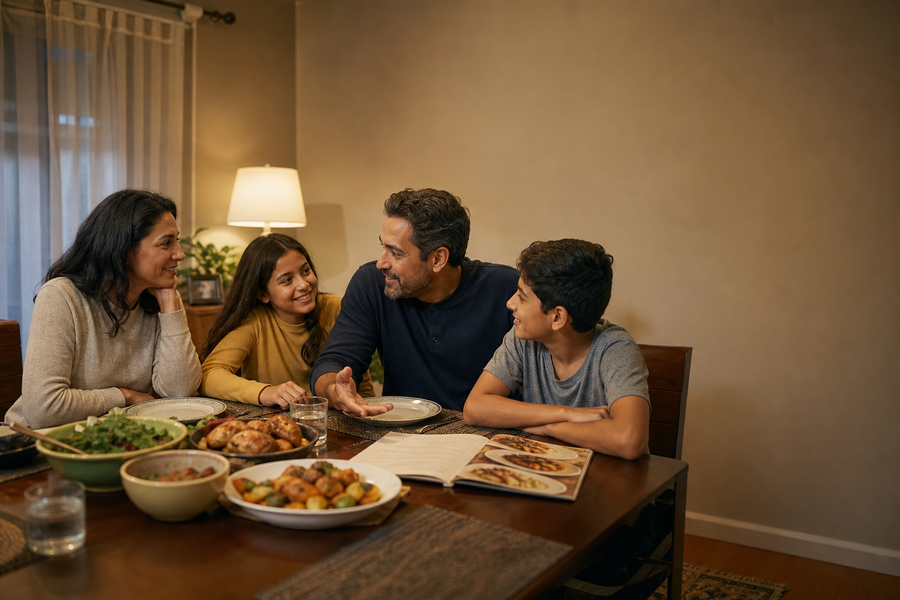
we have food at home

Maybe we do have food at home…

Menu price increases have cooled. Traffic is still falling. That gap is the story.

Jason MolinariJason Molinari
Industry Analyst, Popcorn GTM
Economics and Business Studies Student at New York University
Connect on Linkedin


For decades, fast food sold one thing: a cheap meal, fast. That promise is cracking, and the interesting part is that it's cracking even as the price increases slow down.

Limited-service menu prices rose 3.3% year over year in May 2026 and moderated further to about 3.1% by June. That's a normal number. But food away from home was still up 3.4% against 2.7% for groceries in June, so the gap that sends people back to their own kitchens keeps widening a little every month.

Traffic tells you how that's landing. U.S. QSR traffic fell 1.2% year over year in Q2 2026, after fast-food footfall hit a two-year low in Q1. More telling: the share of stores losing guests specifically because of traffic climbed to 36.3% in Q2 2026, up from 27.8% a year earlier. Operators moderated their pricing and still lost the customer. The damage was already baked in.

The five-dollar decision

Here's where it shows up at the counter. A Supreme Luxe Box at Taco Bell sits in the $7 tier of a $5, $7, and $9 ladder. A Chipotle steak bowl averages $11.68 nationally. That's about five bucks between a smaller meal and a bigger one, and plenty of people are running that math in the parking lot.

Economists call this the substitution effect. When two substitute goods move closer in price, buyers shift toward whichever delivers more utility, which here means portion size, ingredient quality, and how full you feel an hour later.

But the substitution isn't only happening between restaurants. Placer.ai's R.J. Hottovy told The Food Institute that lower- and middle-income consumers have been spreading their visits across value grocers, dollar stores, convenience stores, and warehouse clubs while they hunt for a better deal. Some of those trips are never coming back to a drive-thru. Hence the title.

A K-shaped drive-thru

The split by income is stark. McDonald's CEO Chris Kempczinski said industry traffic among lower-income consumers is down close to double digits while higher-income traffic is up double digits, and visits from households earning under $45,000 keep sliding. Roughly 44% of lower-income consumers say they're dining out less than they were a year ago.

Food policy researcher Sylvain Charlebois put the sharpest point on it: QSRs raised prices far enough to cross a psychological threshold, and what used to read as the affordable option no longer does. He calls it a structural shift rather than a cyclical blip. If he's right, discounting your way out of it is going to be a long project.

The value playbook, version two

Chains have gone back to value, but the shape of the offer changed. The 2024 wave of $5 bundled meals has given way to individual items in the $3 range, which hits an accessible price point without wrecking franchise-level margins. McDonald's loaded up McValue with items like the Sausage McMuffin and McChicken, relaunched Extra Value Meals, and posted 3.9% U.S. same-store sales growth in Q1 2026 on the back of it. Wendy's added Biggie Deals. Taco Bell is promoting a Luxe Value Menu.

Fast casual isn't running away with it either. Cava posted 9.7% same-restaurant sales growth in Q1 2026 on 6.8% traffic growth, while Chipotle managed 2.2% comps in Q2 2026, its best quarter since late 2024 but only after several quarters of falling traffic. Trading up has limits too.

Ok. Now what?

The industry looks like it found its pricing ceiling: the point where another increase costs more traffic than it returns in check average. That's why brands that moderated pricing this year still lost guests. The decision has moved past the number on the menu board.

Price is what a customer pays. Value is what they believe they got for it, and right now that second number is the one deciding whether anybody pulls in at all.


+ + +

Restauromics LOGO final