
I've noticed that over the years with the restaurant technology industry, “integration” gets talked about like a checkbox, something a system either has or doesn’t.
But anyone who has ever built, managed, or scaled integrations knows the uncomfortable truth:
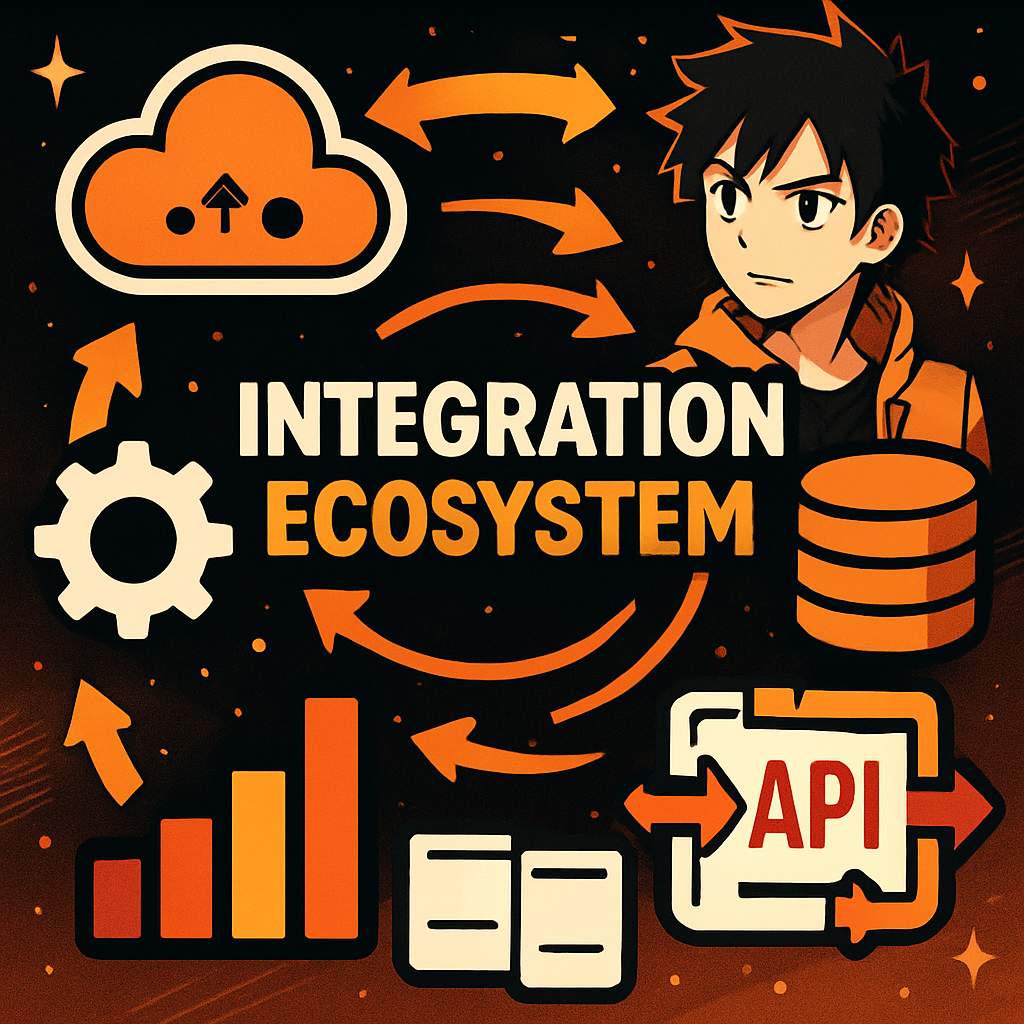
Integration isn’t a feature.
Integration is an ecosystem.
Systems speak different languages.
Data behaves in different ways.
Operations demand different levels of precision, cadence, and control.
That’s why no two integrations are ever identical, even when they look the same on a sales sheet.
The issue isn’t that vendors oversell.
The issue is that integrations are inherently dynamic.
They evolve. They drift. They require understanding, qualification, and curation over time.
And that’s exactly why operators need better questions, not more skepticism.
Why “Seamless” Isn’t the Goal. Alignment Is.
“Seamless” has become the most overused word in restaurant technology. But operators should be aiming for something far more practical:
Does this integration actually fit how our business operates?
Because integration success depends on alignment between:
- your restaurant’s operational rhythms
- the data structures that power those workflows
- the technical capabilities of the systems involved
- the integration method connecting them
When those four pieces match, integration feels seamless.
When they don’t? Even the best technical solution will feel like it’s underperforming.
This isn’t about blame.
It’s about fit.
And fit requires qualification — which is why Popcorn’s Restaurant System Readiness Audit exists.
The Two Integration Models Operators Should Understand
Nearly every integration falls into one of two patterns. Each has strengths. Each has limits. And both can be “right” depending on the operational need.
 1. API Integrations
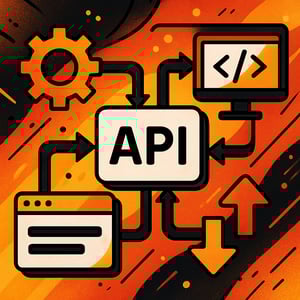
High-speed, flexible, and dynamic — when the use case calls for it
APIs are built for environments where:
- menus update constantly
- inventory adjusts in near real time
- labor changes daily
- data moves in countless small events
But APIs also come with complexity:
version changes, rate limits, payload structures, polling vs. events, permissions, and schema drift.
APIs aren’t “good” or “bad.”
They’re powerful — when curated properly.
This is where an Integration Advisory Framework becomes essential.
Success with APIs is simply about whether what they allow aligns with what the operator actually needs.
 2. SFTP / Flat File Integrations
Stable, predictable, and often exactly the right choice
Flat files still matter because they’re:
- consistent
- structured
- excellent for summaries
- built for financial workflows
- ideal for end-of-day or end-of-period processes
They’re not inferior.
They’re different — and often perfect for accounting, sales reporting, or historical reconciliation.
Choosing the method isn’t the goal.
Matching the method to the operational requirement is.
Where AI Changes the Integration Landscape
AI doesn’t replace integration.
But it elevates it.
Think of AI as a force multiplier for integration teams:
- cleaning and mapping messy data
- predicting mismatches before they hit the system
- translating formats
- accelerating onboarding
- detecting anomalies
- maintaining consistency as menus or locations scale
But don’t let anyone sell you the fantasy that AI eliminates the plumbing.
AI enhances integrations but it doesn’t absolve operators from understanding them. (Learn more from Livelytics)
Why Qualification Matters More Than the Method
Integrations don’t fail because the method was wrong.
They fail because the method wasn’t matched to the need.
Qualification bridges that gap.
When operators ask the right questions, they align expectations, validate assumptions, and ensure integration teams — internal or external — deliver something that actually works for the business.
Here are the questions operators should be asking:
Integration Structure
- What method does this integration use and why?
- What triggers data movement?
- What’s the expected timing (real-time, hourly, nightly)?
For API Integrations
- What operations does the API support?
- Are changes event-driven or polled?
- What data can be pushed vs. pulled?
For SFTP / Flat Files
- What file format will be used?
- What is the delivery schedule?
- What happens if a file fails or changes format?
For AI-Enhanced Integrations
- How does AI help validate or clean data?
- What decisions does AI make automatically?
- Can humans override?
These aren’t “gotcha” questions.
They’re alignment tools — and they’re the heart of Popcorn’s Integration Readiness Approach.
 Restaurant Tech Integration Readiness Checklist
1. Define Your Integration Goals
☐ What specific workflows need to be supported?☐ What data needs to move between systems?
☐ At what frequency (real-time, hourly, daily)?
☐ Which team will own the outcome internally?
2. Clarify How the Integration Works
☐ Is this API-based, flat file/SFTP, or hybrid?☐ What direction does the data flow (one-way or bi-directional)?
☐ What triggers the data movement?
☐ What are the known limitations of this method?
3. Evaluate Data Quality & Mapping
☐ Do both systems define fields the same way (SKU, location IDs, menu items, employees)?☐ Has the vendor provided a data dictionary or schema?
☐ Who is responsible for mapping mismatched fields?
☐ How are exceptions or mismatches handled?
4. Confirm Error Handling & Observability
☐ Is there an audit log or dashboard for monitoring failures?☐ Will error messages be human-readable or require engineering intervention?
☐ How are retries handled?
☐ What’s the expected SLA for resolving failures?
5. Ask About Scalability
☐ Can the integration handle adding new locations quickly?☐ Are there rate limits or API quotas?
☐ What happens during peak restaurant hours?
☐ Does performance degrade as your brand grows?
6. Clarify Responsibilities
☐ Who owns the build?☐ Who owns ongoing maintenance?
☐ Who do you contact when something breaks—support, product, or engineering?
☐ Is ongoing QA included or a paid service?
7. Understand AI-Powered Enhancements (Optional but Increasingly Relevant)
☐ Will AI be used for anomaly detection, mapping, or healing broken data?☐ Is the AI transparent in how decisions are made?
☐ Can you override AI decisions if needed?
☐ Does the AI introduce new data privacy/security considerations?
8. Plan for Launch & Post-Launch
☐ Is there a clear UAT (user acceptance testing) plan?☐ What does success look like 30, 60, and 90 days post-launch?
☐ Are there ongoing checkpoints before issues become operational problems?
☐ Who owns change management internally?
9. Protect Your Investment
☐ Is documentation provided and up to date?☐ Are integration specs versioned?
☐ Is there a rollback plan if something goes wrong?
☐ Are you clear on any additional costs for enhancements or maintenance?
 Protect Your Investment Before You Build
Tech teams don’t fail because they lack talent.Vendors don’t fail because their product is flawed.
Integrations don’t fail because systems are incompatible.
They fail because readiness and qualification were skipped.
When operators understand not just what they want to integrate — but how that integration actually works — they save time, money, and operational frustration.
That’s the work.
That’s the curation.
And that’s where Popcorn GTM comes in.
If you want the integration to work the way it was promised?
Start with readiness. Start with alignment. Start with qualification.