---
title: Your POS Didn’t Fail You. Your Configuration Did.
description: Many POS issues stem from poor configuration, not the software itself. Learn how proper setup and ownership can save time and money.
image: https://platform.chicago.eater.com/wp-content/uploads/sites/17/chorus/uploads/chorus_asset/file/22814873/Toast15.jpg?quality=90&strip=all&crop=0%2C0.074887668497254%2C100%2C99.850224663005&w=2400
---
[Skip to content](https://popcorngtm.com/blog/your-pos-didnt-fail-you.-your-configuration-did#main-content)


[](https://popcorngtm.com)


- [About Us](https://popcorngtm.com/about-us)
- [Fractional CMO](https://popcorngtm.com/fractional-cmo)
- [Marketing & GTM](https://popcorngtm.com/restaurant-technology-marketing)
Show submenu for Marketing & GTM
- [Marketing Playbooks](https://popcorngtm.com/restaurant-technology-marketing)
- [Content Engine](https://popcorngtm.com/aircover)
- [HubSpot CRM & Websites](https://popcorngtm.com/websites)
- [Franchisee Intelligence](https://popcorngtm.com/frandata)
- Media Resources
Show submenu for Media Resources
- [Blog](https://popcorngtm.com/blog)
- [Podcast](https://popcorngtm.com/podcasts)
- [Economics](https://popcorngtm.com/restauromics)
- [Brand Archetype](https://popcorngtm.com/brand-archetype-primer)
- [About Us](https://popcorngtm.com/about-us)
- [Fractional CMO](https://popcorngtm.com/fractional-cmo)
- [Marketing & GTM](https://popcorngtm.com/restaurant-technology-marketing)
Show submenu for Marketing & GTM
- [Marketing Playbooks](https://popcorngtm.com/restaurant-technology-marketing)
- [Content Engine](https://popcorngtm.com/aircover)
- [HubSpot CRM & Websites](https://popcorngtm.com/websites)
- [Franchisee Intelligence](https://popcorngtm.com/frandata)
- Media Resources
Show submenu for Media Resources
- [Blog](https://popcorngtm.com/blog)
- [Podcast](https://popcorngtm.com/podcasts)
- [Economics](https://popcorngtm.com/restauromics)
- [Brand Archetype](https://popcorngtm.com/brand-archetype-primer)
[BOOK TIME](https://popcorngtm.com/contact)
[Online Ordering](https://popcorngtm.com/blog/tag/online-ordering), [Systems](https://popcorngtm.com/blog/tag/systems)
# Your POS Didn’t Fail You. Your Configuration Did.
[By \- Audre Bogoni,](https://popcorngtm.com/blog/author/audre-bogoni) Jan 12, 2026

Your POS doesn’t magically set itself up. The real cost isn’t the software — it’s the hidden labor from bad configuration.
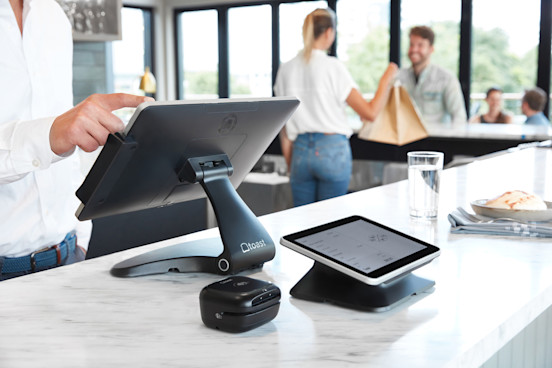
Modern restaurant POS systems are powerful. They’re flexible, cloud-based, and capable of running highly complex operations. And yet, operators using platforms like **Toast, Square, Clover, GoTab**, and similar modern POS systems quietly lose time and money every week.
Not because the software is bad but because no one ever finished the job.
## 
## The Myth. “Once the POS Is Live, We’re Done”
The most common mistake operators make with modern POS systems is assuming implementation equals completion.
One multi-unit operator put it this way:
> *“We went live, the first week was rough, the second week was better, and by week three everyone said, ‘Cool, it works.’
>
> We didn’t touch the setup again for two years.”*
When they finally reviewed their system, they found:
- Multiple versions of the same menu item across locations
- Modifier groups that didn’t roll up correctly in reporting
- Pricing drifting store to store
- Managers manually correcting issues every shift
The POS was functioning but it was frozen in a rushed, incomplete state.
## Configuration Debt. The Cost No One Tracks
Modern POS platforms are intentionally flexible. That flexibility is a strength and a risk.
Small, reasonable decisions accumulate.
- A new modifier added to solve a short-term problem
- A local price change made to keep service moving
- A workaround created during a busy shift that never gets cleaned up
At one fast-casual brand, a regional manager shared:
*“Every problem felt small in the moment. A tweak here. A fix there. Six months later, nothing reconciled cleanly anymore.”*
Eventually...
- Inventory counts didn’t match reality
- Payroll exports required manual cleanup
- Product mix reports lost credibility
- Kitchen execution became inconsistent
No single decision caused the issue the absence of system ownership did.
## How This Shows Up Across Modern POS Platforms
### Toast
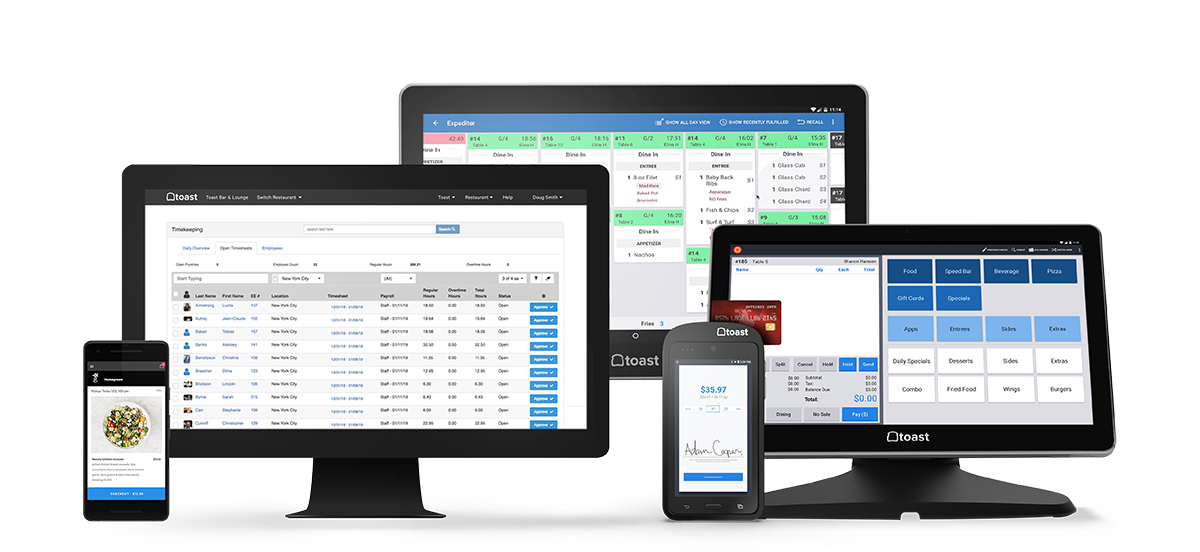
Toast’s depth is a major advantage but only when governed.
A franchise group using Toast shared:
*“We assumed Toast would enforce consistency. Instead, every location interpreted the setup slightly differently.”*
Over time, they discovered:
- Identical items spelled or structured differently by store
- Modifier logic that meant different things in different locations
- Reports that couldn’t be reliably compared
Toast behaved exactly as configured; it just wasn’t configured with discipline.
### Square for Restaurants
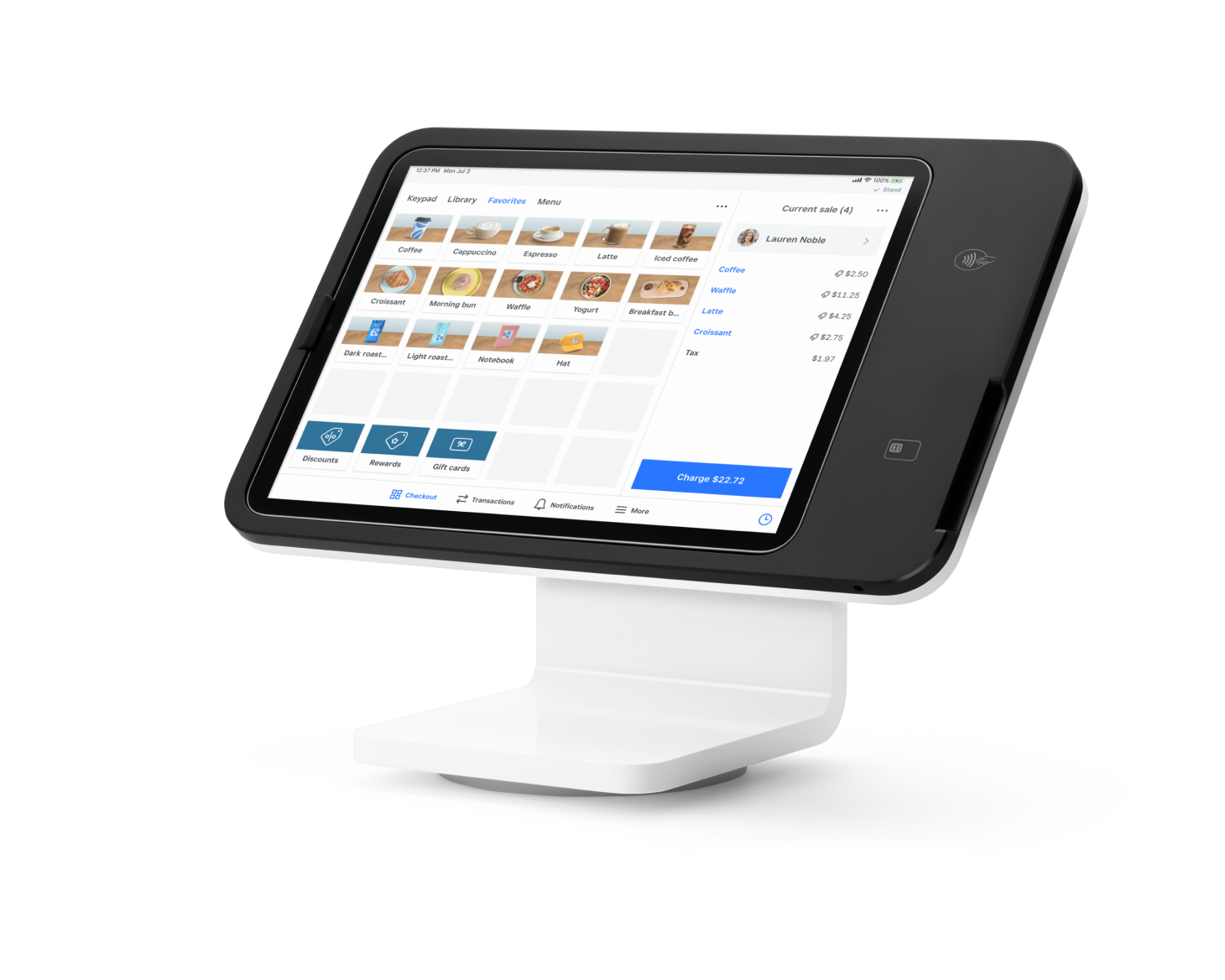
Square’s speed and accessibility are powerful, especially for growing brands.
But as one operator expanding from three to nine locations said:
*“We loved how fast Square was. The problem was that everyone could move fast without guardrails.”*
Managers created items locally to solve immediate needs. Categories evolved organically. Reporting drifted quietly.
By the time leadership noticed, cleaning it up required undoing hundreds of well-intentioned decisions.
### Clover
’s app ecosystem offers flexibility and complexity.
One operator described it simply:
*“Every time we had a problem, someone added an app. No one ever removed one.”*
Eventually.
- Data lived in multiple systems
- Apps overlapped in function
- Reports conflicted
- Support tickets bounced between vendors
The challenge wasn’t Clover, it was architecture without ownership.
### GoTab
GoTab excels in digital-first and QR-heavy environments.
But as one hospitality operator noted:
*“Guests loved ordering on their phones. The kitchen hated what came out the other side.”*
Courses weren’t mapped correctly. Firing logic didn’t match prep flow. Expo became the bottleneck.
The guest experience looked modern. The back-of-house absorbed the cost.
---
## The Hidden Cost. Humans Replacing System Design
When POS configuration is weak, people compensate.
A general manager described their nightly routine.
*“Every night I fix reports, explain discrepancies, and send notes to accounting. Thing is that none of that is my actual job.”*
Another operator said:
*“Our staff knows which buttons to avoid. That should’ve been the first red flag.”*
These aren’t training problems. They’re system design problems quietly absorbed by labor.
## 
## Where Experienced Systems Leadership Creates Real Value
Modern POS platforms assume someone is thinking holistically about.
- Menu structure
- Modifier logic
- Reporting integrity
- Labor configuration
- Integration impact
- Change governance
Most restaurants never assign that role.
When someone does own the system, operators often say the same thing:
*“Once someone actually owned the POS, everything calmed down. We didn’t realize how much chaos we were normalizing.”*
## The Real Question Isn’t “Which POS Should We Use?”
The real question is:
***“Who owns the system after go-live?”***
Because without ownership:
- Flexibility becomes fragmentation
- Features go unused
- Data loses credibility
- Labor fills the gaps
Your POS didn’t fail you. Your configuration was never finished.
If you need help with your POS setup and configuration, see our [Tech Enablement services](https://popcorngtm.com/tech-enablement) and contact us for a free consultation.
### Contact Us
###### Category
- [Industry](https://popcorngtm.com/blog/tag/industry)
- [Marketing](https://popcorngtm.com/blog/tag/marketing)
- [Hot Takes](https://popcorngtm.com/blog/tag/hot-takes)
- [GTM](https://popcorngtm.com/blog/tag/gtm)
- [Artificial Intelligence](https://popcorngtm.com/blog/tag/artificial-intelligence)
- [Podcast](https://popcorngtm.com/blog/tag/podcast)
- [News](https://popcorngtm.com/blog/tag/news)
- [Systems](https://popcorngtm.com/blog/tag/systems)
- [Web 3](https://popcorngtm.com/blog/tag/web-3)
- [Online Ordering](https://popcorngtm.com/blog/tag/online-ordering)
- [Gen Z](https://popcorngtm.com/blog/tag/gen-z)
- [Industry Economics](https://popcorngtm.com/blog/tag/industry-economics)
- [Search](https://popcorngtm.com/blog/tag/search)
### Similar Blogs
#### [Demo Video or Product Explainer? Pick the Job Before You Hit Record](https://popcorngtm.com/blog/demo-video-vs-product-explainer)
By [Paul Molinari](https://popcorngtm.com/blog/author/paul-molinari) 21 October 2026
Most restaurant tech videos fail before anyone presses record. Somebody says "we need a video,"...
[READ MORE](https://popcorngtm.com/blog/demo-video-vs-product-explainer)

#### [The Myth of “Seamless Integration” and Curating the Right Capabilities](https://popcorngtm.com/blog/the-myth-of-seamless-integration-and-why-the-real-power-is-in-curating-the-right-capabilities)
By [Audre Bogoni](https://popcorngtm.com/blog/author/audre-bogoni) 1 December 2025
I've noticed that over the years with the restaurant technology industry, “integration” gets talked...
[READ MORE](https://popcorngtm.com/blog/the-myth-of-seamless-integration-and-why-the-real-power-is-in-curating-the-right-capabilities)

#### [Every Last Cent Counts: Using Dynamic Pricing in Chain Restaurants](https://popcorngtm.com/blog/dishing-up-profits-precision-pricing-in-chain-restaurants)
By [Paul Molinari](https://popcorngtm.com/blog/author/paul-molinari) 3 February 2024
#### Like the travel industry, restaurant chains have access to advanced revenue management solutions,...
[READ MORE](https://popcorngtm.com/blog/dishing-up-profits-precision-pricing-in-chain-restaurants)
[](https://popcorngtm.com)
Show Up. Every Week. Make it Pop.
---
- THE MENU
- [- Fractional CMO](https://popcorngtm.com/fractional-cmo)
- [- Marketing Playbooks](https://popcorngtm.com/restaurant-technology-marketing)
- [- Air Cover Content Marketing Engine](https://popcorngtm.com/aircover)
- [- Tech Enablement Services](https://popcorngtm.com/tech-enablement)
- [- Hot Takes, Fresh Blog](https://popcorngtm.com/blog)
- [- Restauromics Financial News](https://popcorngtm.com/restauromics)
- [- Book Time](https://popcorngtm.com/contact)
[](https://popcorngtm.com/podcasts)
COPYRIGHT © 2026 POPCORN MARKETING GROUP, LLC | POPCORN GTM IS A REGISTERED TRADEMARK, ALL RIGHTS RESERVED.
[DATA PRIVACY |](https://popcorngtm.com/privacy-policy) [TERMS & CONDITIONS](https://popcorngtm.com/privacy-policy)
```json
{
"@context" : "https://schema.org",
"@type" : "BlogPosting",
"author" : {
"@type" : "Person",
"name" : "Audre Bogoni",
"url" : "https://popcorngtm.com/blog/author/audre-bogoni"
},
"dateModified" : "2026-01-12T18:21:47.167Z",
"datePublished" : "2026-01-12T18:21:47.000Z",
"headline" : "Your POS Didn’t Fail You. Your Configuration Did.",
"image" : [ "https://platform.chicago.eater.com/wp-content/uploads/sites/17/chorus/uploads/chorus_asset/file/22814873/Toast15.jpg?quality=90&strip=all&crop=0%2C0.074887668497254%2C100%2C99.850224663005&w=2400" ],
"mainEntityOfPage" : {
"@id" : "https://popcorngtm.com/blog/your-pos-didnt-fail-you.-your-configuration-did",
"@type" : "WebPage"
},
"publisher" : {
"@type" : "Organization",
"logo" : {
"@type" : "ImageObject",
"url" : "https://popcorngtm.com/hubfs/Popcorn%20GTM%20LOGO%202026.png"
},
"name" : "Popcorn GTM "
}
}
```