


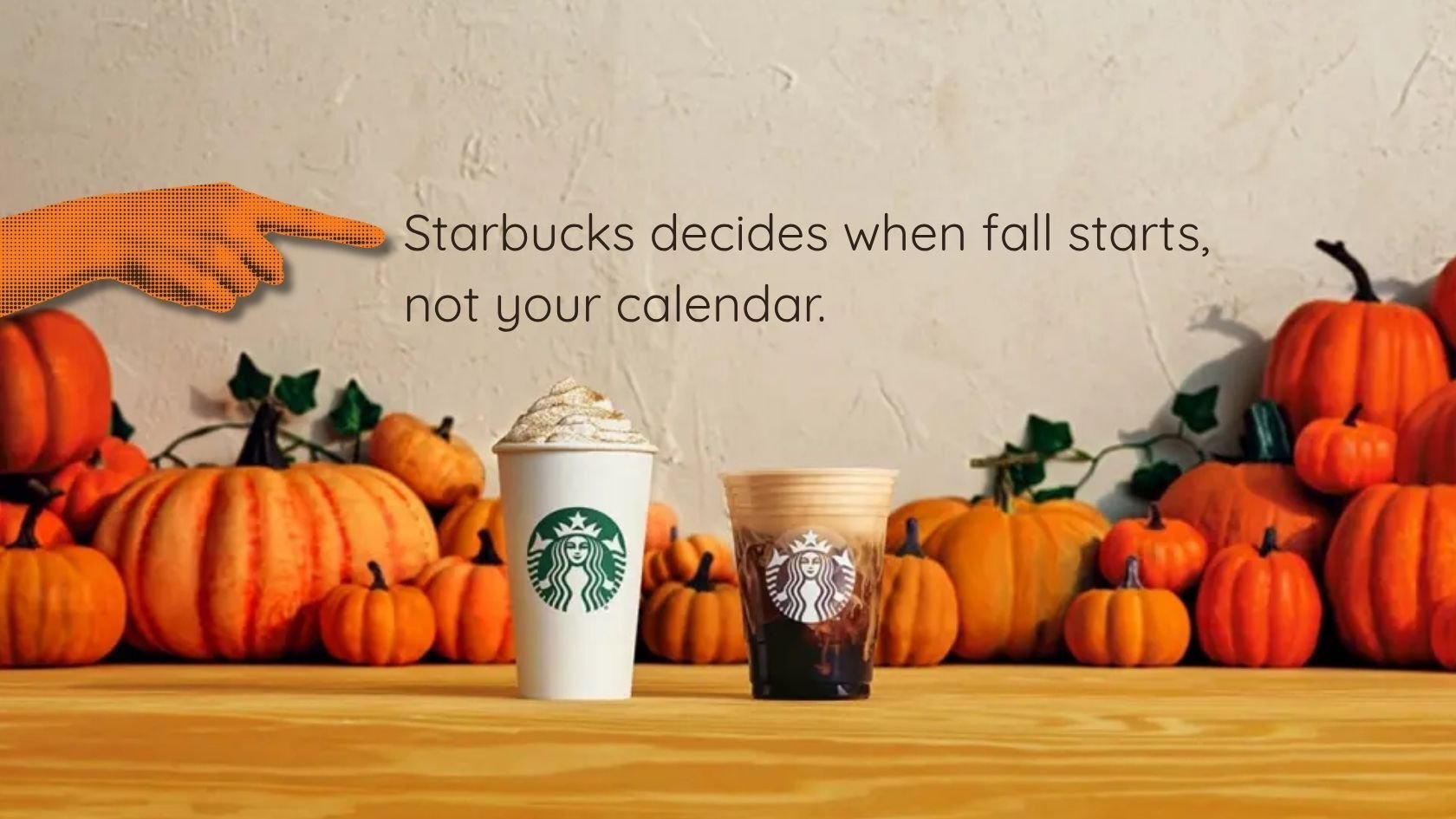
Last week I wrote about how matcha got expensive because supply couldn’t keep up with demand. Pumpkin spice is the complete opposite story. Starbucks decided to launch its 2026 fall menu on Tuesday, August 25, many weeks before the first real day of fall, yet people still showed up. And that’s the entire point.
Starbucks decides when fall starts, not your calendar.
Restaurants aren’t the ones responding to seasonal demand. They’re the ones creating it altogether. By deciding when fall “starts,” a company can pull sales forward and turn a few cinnamon-flavored drinks into a calendar event. The best part for Starbucks is that it will never not be sought after. The scarcity of a limited-time event creates enough hype during the seasons it isn’t offered to ensure profit and immense demand.
The economics behind this are pretty simple. When something is only available for a limited time, scarcity makes it feel more valuable, and shoppers buy now instead of “someday,” because “someday” won’t exist for the rest of the year. It also lets businesses charge a premium without it feeling like a price hike. About 39% of consumers say the “pumpkin spice tax,” the extra price on seasonal items, is real, and plenty of them pay it anyway, ConsumerAffairs reports.
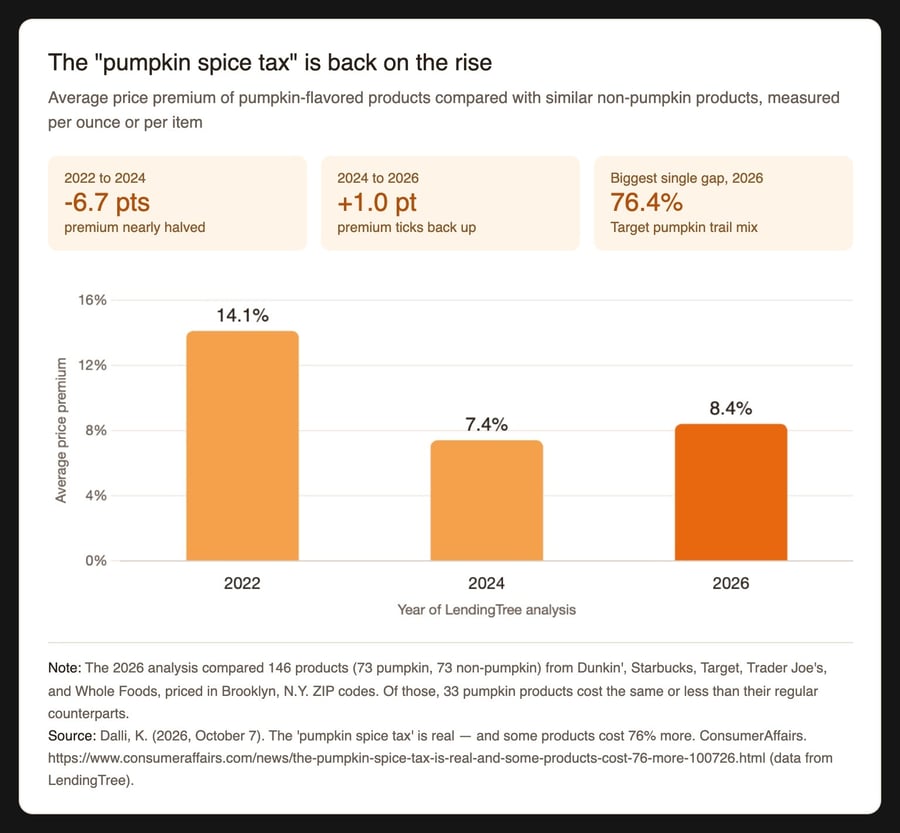
Economists call this willingness to pay: if a drink feels special and temporary, people will pay more for it than for an everyday latte. It’s wild that a spice blend can do that, but there’s no denying its nostalgic flavor.
It’s Not Just a Latte Anymore
/https://tf-cmsv2-smithsonianmag-media.s3.amazonaws.com/filer_public/9e/7c/9e7c6e5a-1dd1-4065-abc2-cc770de42d5d/starbucks-psl.jpg) The smartest part is how big the idea has gotten. Coverage of the 2026 launch points out that this year’s comeback is less about a single drink and more about turning pumpkin spice’s arrival into a full seasonal menu. There are new drinks, food items, and limited-time drinkware, and the brand even sells grocery products like creamers and bottled coffee. Personally, I look forward to the pumpkin spice donuts, not the drinks.
The smartest part is how big the idea has gotten. Coverage of the 2026 launch points out that this year’s comeback is less about a single drink and more about turning pumpkin spice’s arrival into a full seasonal menu. There are new drinks, food items, and limited-time drinkware, and the brand even sells grocery products like creamers and bottled coffee. Personally, I look forward to the pumpkin spice donuts, not the drinks.
That’s demand being stretched across multiple products, so the season sells a feeling rather than just a flavor. It also helps that people see the fall menu as a tradition, so the demand comes back every year without much convincing or surprise, just excitement.
The Hidden Consequences for Restaurants
Seasonal menus aren’t free money, though, and this is where it gets tricky for smaller operators, like your favorite locally owned coffee shop. Every limited-time item adds prep work, new supply to buy, and the risk of leftover inventory that goes to waste when the season ends. There’s also an opportunity cost: the time and shelf space spent on a seasonal item can’t be used for something else.
Big chains can absorb a miss, and they know exactly how to price their flagship item. Small shops may not have that cushion. Starbucks held its pumpkin spice latte price flat in 2025 despite inflation and tariff worries, which shows how much it protects its best seasonal seller.
For a smaller independent, the lesson is to:
- Keep seasonal items simple
- Use ingredients you already stock
- Set a firm end date
- Price for the premium instead of discounting
If you haven’t had a pumpkin spice food or drink this season, go out and enjoy one. Remember, it won’t be around forever.
- Jason Molinari is an Economics and Business Studies student at New York University.